U.S. grocery retailers face mounting pressures in 2026 as grocery checkout regulations evolve across payments, staffing, and loss prevention. Federal SNAP/EBT program expansions may require complex Point of Sale (POS) upgrades, while the rise of Organized Retail Crime leads legislators to find solutions in self-checkout mandates that could threaten labor budgets. The $112 billion annual retail theft crisis is amplified by shrinking basket sizes at the checkout due to inflation and a tightening of SNAP spending. These market challenges force grocers to rethink checkout operations, inventory planning, staffing models, and loss prevention strategies.
SNAP and EBT: Grocery Checkout Regulations Drive Mandatory Online Integration
The Supplemental Nutrition Assistance Program (SNAP) and Electronic Benefits Transfer (EBT) systems support grocery purchases for 42 million Americans. However, 2026 USDA rules elevate online EBT acceptance from optional to mandatory, for authorized retailers.
Retailers now need USDA approval for digital SNAP processing and must integrate eCommerce platforms with POS systems that support split-tender transactions, separating EBT-eligible groceries from non-eligible items like hot foods, alcohol, or supplements. Many legacy POS platforms struggle to meet updated security requirements, including encrypted processing and real-time verification of SNAP-eligible inventory. Stores that don’t comply risk deauthorization and the loss of sales from this critical customer segment.
Larger chains like Walmart maintain advantages through established infrastructure, while regional grocers struggle to match pace. For these retailers, upgrading to a modern POS that is EBT compliant will ensure that they will keep customers utilizing these supports.
Another important checkout-related shift in 2026 is the rollout of chip-enabled SNAP EBT cards in a growing number of states. Driven by widespread skimming and card-cloning fraud, states such as California and Oklahoma have already begun issuing chip-enabled cards, while others are preparing similar transitions. USDA/FNS has advised SNAP retailers to ensure their payment environments can successfully process these cards, meaning grocers may need to verify that their PIN pads, payment processors, and POS integrations are ready to support EBT chip acceptance. For retailers operating on older front-end hardware or legacy payment configurations, this creates another modernization pressure point at checkout.
Retail Theft Crisis: Organized Crime Escalate Shrink
Grocery shrink rates surged 20% since 2020, reaching $112 billion annually.
Organized Retail Crime drives 2% in price increases that is passed to consumers.
The Impact of Theft & Violence 2025 report found that retailers reported an 18% increase in the average number of shoplifting incidents per year in 2024 versus 2023 and threats or acts of violence during shoplifting or theft events increased 17% during that same time period, indicating that criminal enterprises are becoming more brazen and dangerous. The same study 66% of NRF survey respondents cite repeated offenders are a major concern. In New York City, 327 individuals accounted for 6,600 shoplifting arrests in a single year, roughly one-third of the total.
In response to this escalating problem, on March 10, 2026, Bronx Councilmember Amanda Farías, introduced a bill targeting grocery and pharmacy stores over 15,000 square feet. Key mandates include a 15-item limit per self-checkout transaction and one employee supervising every three kiosks, enforced by the Department of Consumer and Worker Protection with fines starting at $100 per employee per day (capped at $1,000).
Proponents frame the legislation as protecting retail jobs, enhancing customer assistance, and curbing “theft by confusion” at unattended kiosks. However, critics charge New York City with unfairly penalizing retailers adopting labor-saving technology. They argue the proposal shifts blame from justice system failures and policies the victims of the crimes and not the perpetrators. Organized retail crime gangs exploit lax enforcement with impunity, while grocers could face fines. If enacted (effective one-year post-passage), there could be rapid copycat legislation in Chicago, Los Angeles, and other high-theft markets.
Low Basket Size Pressures
SNAP Work Rules
The One Big Beautiful Bill Act of 2025 tightened Able-Bodied Adults Without Dependents (ABAWD) rules, now covering adults 18-64 without children under 14. Recipients must work, volunteer, or train 80+ hours/month or lose benefits after 3 months in a 3-year period.
A retailer impact of 1.2M fewer SNAP households is expected by 2027 as non-compliant adults cycle off, starting in June of this year. As a result grocers could see a 30-40% basket size drop for affected customers.
Loyalty and Promotions to Help Grocers Protect Basket Size
As budgets tighten, shoppers are actively trading down and hunting for savings, making loyalty and promotions one of the most effective levers retailers can pull in 2026. Zappi’s 2026 grocery research found that 93% of consumers are changing how they shop, with 46% using coupons or promotions, 40% switching to store brands, 38% buying only essentials, and 34% buying fewer items to offset price increases.
In 2026, loyalty is less about “nice-to-have rewards” and more about protecting trips and basket size. Capital One Shopping reports that 84% of consumers say loyalty programs influence their decision to keep shopping with a business or brand, a clear signal that integrated loyalty can reduce churn when shoppers are hunting for the best value and cutting impulse items.
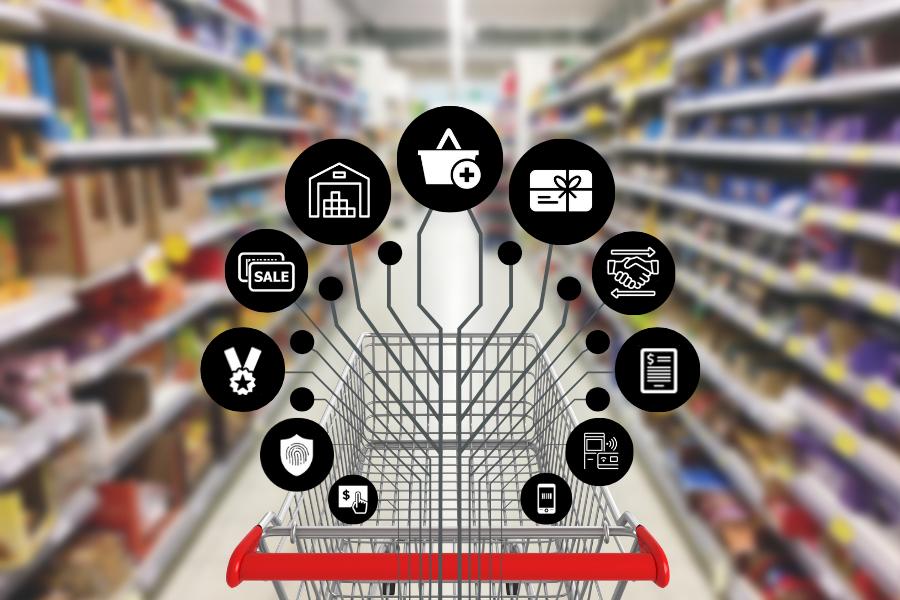
As grocery checkout regulations and consumer behavior shift in 2026, checkout technology is no longer just about processing transactions, it’s about protecting revenue, maintaining compliance, and strengthening customer loyalty. If your current POS can’t support secure, modern payment requirements or the operational visibility needed to manage shrink and changing demand, it may be time to evaluate an upgrade path that keeps your store competitive, today and into what comes next.