Across North America, tariff activity, trade uncertainty, and shifting foreign policy are putting pressure on grocery costs, supplier relationships, and shopper expectations. At the same time, food retailers continue to operate on thin margins. According to FMI’s The Food Retailing Industry Speaks 2025, financial performance remains a key pressure area for food retailers, making it even more important for grocers to manage pricing, inventory, promotions, and supplier decisions carefully.
While domestic sourcing is not always the lowest-cost option, tariffs and trade uncertainty can make imported goods more volatile. For independent grocers, this creates a strong reason to evaluate domestic and regional suppliers, compare landed costs, and promote products that offer better availability, price stability, or local appeal.
A domestic product strategy can help retailers give shoppers more choice while reducing reliance on categories that may be affected by sudden tariff changes, exchange rates, or supply disruptions.
Use Displays and End Caps to Spotlight Domestic Products
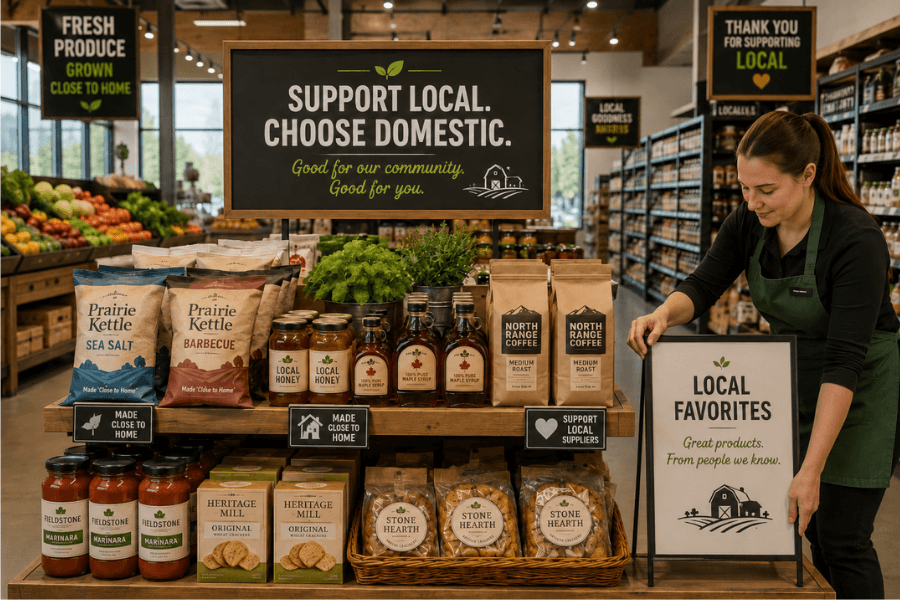
High-traffic displays and end caps are some of the most effective ways to draw attention to domestic goods in a grocery store. Instead of placing domestic products only in their regular shelf locations, grocers can create dedicated displays that make these items easier for shoppers to notice.
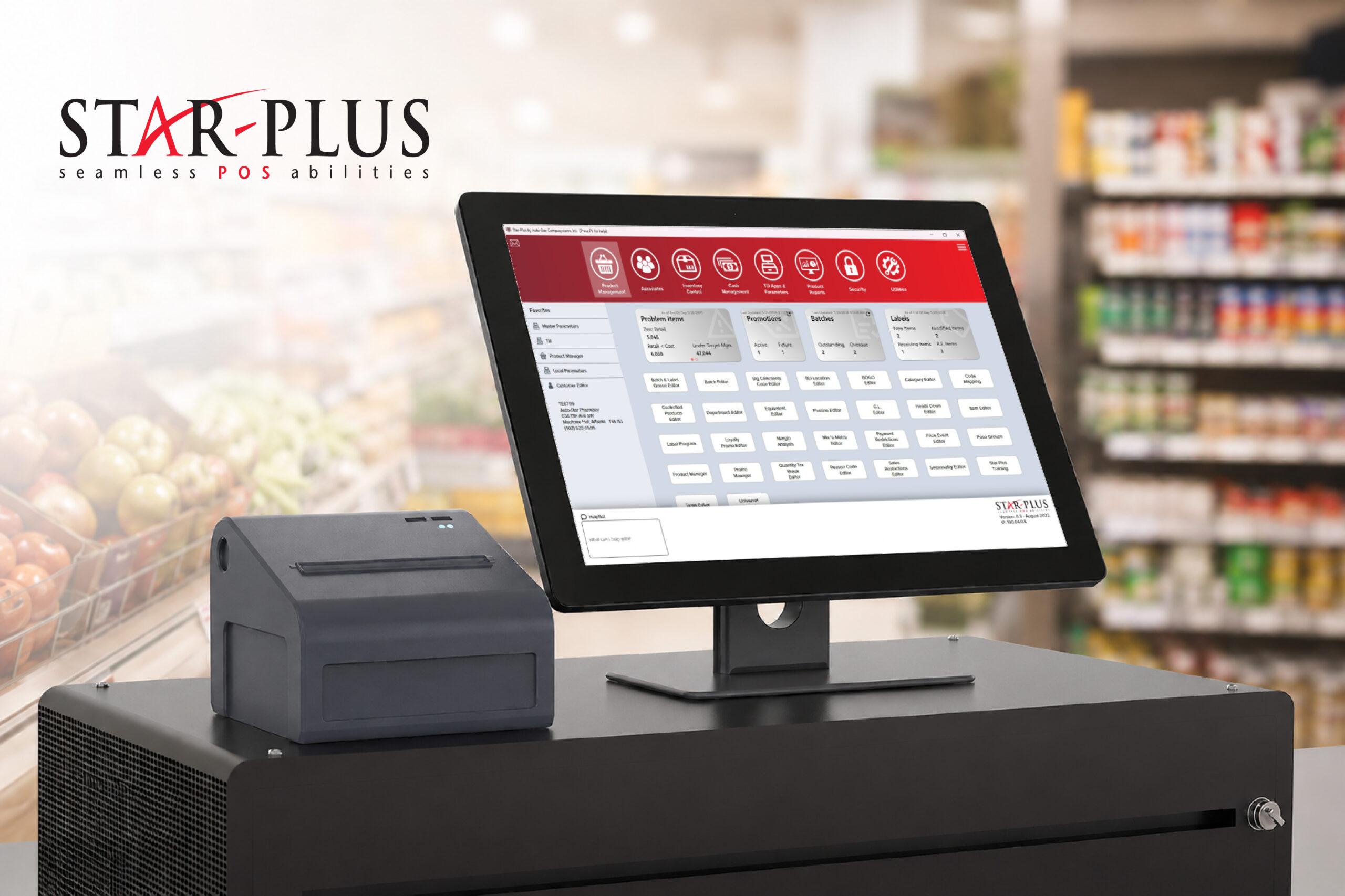
Point of Sale (POS) software can help make these merchandising efforts more strategic. With tools like a Store Layout Editor, grocers can create a visual representation of their retail space. Adding products to shelves, structures, and bin locations. Sales heat maps can help identify high-performing and low-performing areas of the store. This gives retailers more insight into where domestic product displays may have the greatest impact.
By connecting store layout with sales and inventory data, grocers can test different product placements, monitor shelf performance, and adjust displays based on customer buying behavior. Instead of guessing where to place featured domestic goods, retailers can make merchandising decisions backed by real store data.
Use POS-Generated Signs and Labels to Highlight Domestic Goods
Clear signage can make domestic products easier for shoppers to find and understand. When promoting domestic goods, independent grocers can use shelf tags, product labels, end cap signs, and promotional display signage to call attention to where items come from and why they are being featured.
POS-generated signs and labels can help grocers include important product details such as country of origin, state or province, region, supplier name, price, promotion details, barcode, and product description. This makes it easier to create consistent product call-outs across departments. For example, a grocer could create shelf tags that say:
- “Locally Made” or “Domestic Favorite”
- “Produced in [Province or State]” or “Grown Close to Home”
- “Regional Supplier Spotlight” or “Regional Favorite”
Promotional display signs can also be used for end-caps, seasonal features, weekly specials, and supplier spotlight displays. A store could feature a domestic producer with a sign that includes the supplier’s story, product details, and current promotion.
With modern signs and labels, retailers can create professional shelf tags, product labels, sale signs, and promotional signage using information from the POS system. This helps keep pricing accurate, reduces manual work, and ensures display signage stays aligned with current promotions and price changes.
When domestic products are clearly labelled and promoted, shoppers can make faster buying decisions, staff can answer questions more confidently, and grocers can create a stronger in-store story around the products they want to feature.
Plan, Execute & Track Promotions for Domestic Goods
Promoting domestic goods works best when it is planned around moments when shoppers are already thinking about food and gatherings. National holidays, long weekends, and sporting events are all great opportunities to feature domestic products across the store.
These promotions can highlight domestic products across multiple departments, including produce, meat, bakery, deli, grocery, snacks, beverages, frozen foods, and prepared meals.
POS software can make these campaigns easier to plan and manage. Retailers can use product filters, such as country of origin, region, or brand, to identify domestic items for a promotion. From there, stores can create targeted offers, update pricing, generate promotional signage, and track performance through the POS.
A grocer could create a “Game Day” promotion using product filters to identify domestic chips, dips, beverages, and deli items. A summer promotion could focus on domestic produce, regional meats, and locally made sauces. A holiday campaign could spotlight domestic baking ingredients, specialty foods, and giftable items.
By planning promotions in advance and using POS data to filter eligible products, grocers can create more organized campaigns. All while reducing manual setup, and ensuring the right products are promoted at the right time.
After the promotion, inventory reporting can show which products performed well, which displays drove interest, and items to be reordered.
Tell the Story Behind the Product
Domestic goods are more compelling when shoppers understand the story behind them. Independent grocers can use social media, and in-store displays to introduce customers to the people and businesses behind the products.
Instead of simply displaying a domestic product, add a sign that explains where it is made, and why it’s unique. If a local farm supplies your produce department, share a supplier spotlight with a photo, location, and product details.
This type of storytelling makes domestic products feel more meaningful. It also helps shoppers connect with the purchase and gives them a reason to come back for unique products.
Turning Domestic Goods Into a Store Wide Strategy
As tariffs, trade uncertainty, and price volatility continue to affect grocery costs across North America, independent grocers need practical ways to, protect margins, and give shoppers more confidence in the products they buy. Promoting domestic goods can be one way to do that, especially when it is supported by clear merchandising, accurate product information, and strong supplier relationships.
By using strategic displays, and sales reporting, grocers can turn domestic goods into more than a shelf feature. They can create a store wide strategy that helps shoppers discover regional products, and make informed buying decisions.
For independent grocers, domestic goods are not just products on the shelf. They are an opportunity to respond to changing market conditions, support trusted suppliers, and create loyal customers.
If you’re ready to put a domestic goods strategy into action, Star-Plus POS gives you the tools to do it. All without adding staff time or manual workarounds. From store layout planning and professional shelf signage to promotion setup and post-campaign reporting, it’s all connected in one system built for independent grocery retailers.
Request a Demo to see it in action, or explore Star-Plus POS to learn what’s included.