“Stickiness” is often discussed as a retention strategy. But retention by itself is not the goal. The better question is why a merchant chooses to stay.
The strongest merchant relationships are not built by making it difficult for customers to leave. They are built by making the relationship too valuable to replace.
Integrated payments can strengthen that relationship because they connect payment technology more closely with the merchant’s daily operations, support experience, and ability to keep transactions moving. By reducing friction, improving support, and creating more opportunities for resellers to stay involved, payments can strengthen the merchant relationship for the right reasons.
That value is showing up in merchant behavior. Worldpay’s 2025 Merchant Insider Report found that 48% of businesses surveyed said they were unlikely to switch providers because they were satisfied with their payments, up from 39% in 2023. Another 36% pointed to good customer service and technical expertise as a key reason for staying with their provider.
For Value Added Resellers (VARs), that reinforces an important point: payment stickiness is not created by processing alone. It is built through the combination of technology, support, and an experience merchants do not want to give up.
Integration Removes Friction at the Checkout
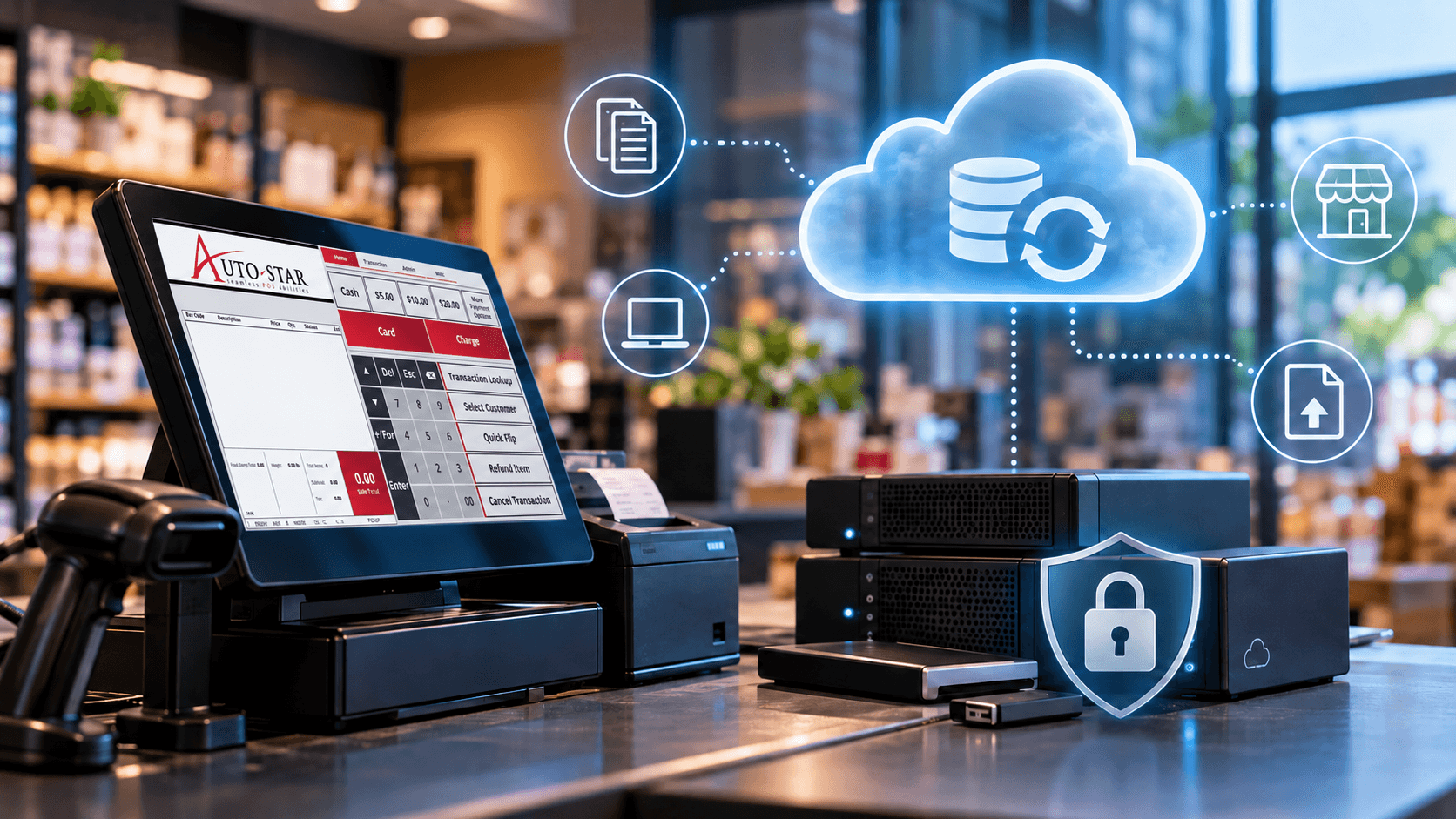
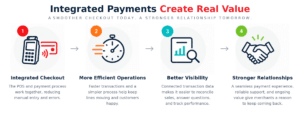
At its most basic level, integrated payments connect the payment process directly with the Point of Sale (POS) transaction. Instead of an employee manually entering the sale amount into a separate payment terminal, the POS can pass the transaction information to the payment device.
That can reduce duplicate entry, minimize payment-entry errors, and create a smoother checkout experience.
For busy retailers, even small efficiencies can matter. A simpler process can help employees move customers through checkout more efficiently, particularly during peak periods. It can also shorten the learning curve for new employees because payment handling becomes part of the same checkout workflow.
Depending on the integration, connected transaction records may also make it easier to investigate discrepancies, answer payment questions, reconcile transactions, or locate an original sale when processing a refund.
Integration can also help retailers meet customer expectations around how they pay. Depending on the business and payment solution, that may include specialized payment types such as EBT, eWIC, or FSA, along with contactless options such as Apple Pay and Google Pay. Supporting these payment methods through the same checkout experience can make transactions more convenient for both customers and employees.
None of these are reasons a merchant would switch POS systems. Together, they are the reason they stop thinking about it.
Better Support Can Be Just as Important as Better Technology
One of the frustrations merchants can encounter with disconnected technology is figuring out who to call when something goes wrong.
If the POS comes from one company, the payment terminal from another, and processing from someone else, troubleshooting can quickly become complicated.
Is the problem with the POS? The terminal? The network? The processor?
Most merchants do not want to diagnose that themselves. They want a clear way to reach support and confidence that someone will help move the issue toward a resolution.
A VAR or technology partner that understands both the POS environment and the payment setup can provide a clearer point of contact. Even when another provider is involved behind the scenes, the reseller can help coordinate the issue instead of leaving the merchant to navigate multiple suppliers on their own.
That support model is only valuable if help is accessible when it is needed. Merchants should understand how they can get help, when live support is available, what happens after hours, and whether resources are available for less urgent questions.
Over time, accessible support, clear communication, and familiarity with the merchant’s business can become powerful reasons to continue working with the same technology partner.
Payments Create an Ongoing Customer Relationship
POS systems can have long purchasing cycles. Once a system is installed and operating well, years may pass before a merchant needs another major technology purchase.
Payments are different. They are part of the business every day.
That gives VARs a natural reason to remain connected with customers between major purchases and regular contact may uncover a need for employee training, an additional checkout lane, mobile payment capabilities, new hardware, or a different workflow. It may also reveal that the merchant is not using useful functionality already available through the POS.
The goal does not have to be creating another sales opportunity. The greater value is maintaining an understanding of how the customer’s business is changing.
Integrated payments can also create recurring revenue alongside software, hardware, installation, and support services. A more diversified revenue model is what pays for the people and expertise required to serve customers well.
The merchant benefits from reliable payment processing and responsive service. The VAR benefits when the merchant’s transactions continue to flow and the relationship remains successful.
That shared interest can help create a more proactive service relationship rather than one built primarily around the next hardware replacement.
The Conversation Should Go Beyond the Processing Rate
Processing cost will always matter.
Merchants should understand what they are paying, how fees are structured, and what contractual terms apply. A statement analysis should help answer three important questions:
- What is the merchant’s effective rate? Compare total processing fees with total processing volume to understand what the merchant is actually paying versus the rate originally quoted.
- Which fees are negotiable? Some costs are set by the card networks, while others are determined by the processor and may be negotiable depending on the merchant’s processing volume.
- Which fees can be avoided entirely? PCI non-compliance fees are a common example. Many processors charge these fees when merchants have not completed required annual validation, and the costs can increase over time.
Helping a merchant understand and complete that annual validation can create meaningful savings. For a reseller, that kind of proactive support may deliver more value than simply matching a competing processing rate.
But rate alone does not tell the whole story.
A merchant evaluating payment options should also consider the quality of the integration, available payment technology, support, hardware, reconciliation, reliability, and what happens when something goes wrong.
A lower processing rate may not offer the best overall value if the merchant spends more time dealing with disconnected suppliers, manual processes, or support issues.
For VARs, that changes the conversation from:
“Can we offer a better rate?”
to:
“Can we help this business understand its true processing costs and make payments easier to manage?”
That is a much stronger foundation for a long-term relationship.
Trust Starts with Choosing the Right Payments Partner
Creating a stronger merchant relationship also means being selective about the payment partners brought into that relationship.
Integrated payments create more touchpoints with the merchant, but they also make the reseller more closely associated with the payment experience.
If pricing is unclear, support is poor, contract terms are difficult to understand, or the provider does not meet applicable regulatory requirements, that can quickly erode the trust the VAR has worked to build.
That makes partner due diligence part of the stickiness equation.
VARs should look beyond rates and evaluate the provider’s support model, pricing transparency, contract terms, technology, risk practices, and ability to support the merchant over time.
For Canadian VARs, that review should also include the Retail Payment Activities Act, or RPAA. The Bank of Canada maintains a public registry of payment service providers registered under the federal retail payments framework. Where a provider is required to register, resellers can use the registry to verify its status as part of their due diligence.
Search the Bank of Canada’s Payment Service Provider Registry
U.S. VARs operate within a different regulatory environment, but the principle is the same. Payment partners should be carefully vetted before being introduced into an existing merchant relationship.
Choosing the right payments partner matters because the merchant may not separate the payment experience from the reseller who recommended it. A strong payments partner can reinforce trust, while a poor experience can weaken the relationship.
The Best Stickiness Is Earned
Integrated payments can strengthen merchant relationships because they give technology providers more opportunities to solve problems, understand the business, and deliver ongoing value.
For merchants, that can mean fewer manual steps, better coordination, clearer support, and a partner who already understands their operation.
For VARs, it can mean recurring revenue, more regular customer contact, and a deeper understanding of how the merchant’s needs are evolving.
That same approach is reflected in how Auto-Star works with its reseller network. Auto-Star resellers are free to bring their existing processing relationships, and some choose to do so. For those who offer ClearTEQ Merchant Services, the value is straightforward: it is white-labelled under a brand their merchants already know, POS and payment support come through the same team, and the pricing is clear and transparent, making the conversation simpler and more collaborative.
None of that prevents a merchant from choosing another provider. It simply makes the reasons to stay easier to explain.
The best kind of stickiness is earned through easier payments, better support, and more value for the merchant.
Rather than making it difficult for customers to leave, the goal is to give them good reasons to stay.
No slime required.
Build More Value into the Payments Relationship
Auto-Star gives resellers the flexibility to provide integrated POS and payment solutions while choosing the processing approach that works for their business and their customers.
Learn more about Auto-Star’s integrated payment processing and merchant services. Contact our team to discuss the right approach for your customers.